
Baled bagasse — 0.5 ton bales, fully wrapped and sealed in plastic to preserve product quality and extend shelf life.
UCL Animal Feed Division
Our competitive advantage is founded on its longstanding commitment to sustainability. For over a century, the company has consistently reinvested profits, expertise, and experience to foster continued growth. Our animal feed products demonstrate this dedication by utilising byproducts generated from sugarcane processing, such as fibrous bagasse and raw molasses.
Sugarcane production results in significant quantities of by products like fibrous bagasse, tops, and raw molasses. In keeping with our commitment to renewable innovation, we have found excellent ways to utilize these byproducts for animal feed, reducing wastage while meeting the needs of local farmers.
We combine bagasse and raw molasses into a low-cost, palatable, and fibre-rich animal feed, which is baled and distributed through our existing supply chain.
The molasses provides nutrients and increases palatability, while the bagasse provides body and fibre. This feed has been proven to support healthy digestion in livestock, especially when used in conjunction with other forms of feed like cattle concentrate.
We also combine bagasse with byproducts from our wattle extract process to create renewable biofuel for our factories. If we can find a way to reduce waste and enhance productivity, we will!
Consistent quality, service excellence, and a commitment to local agriculture: this is our world.
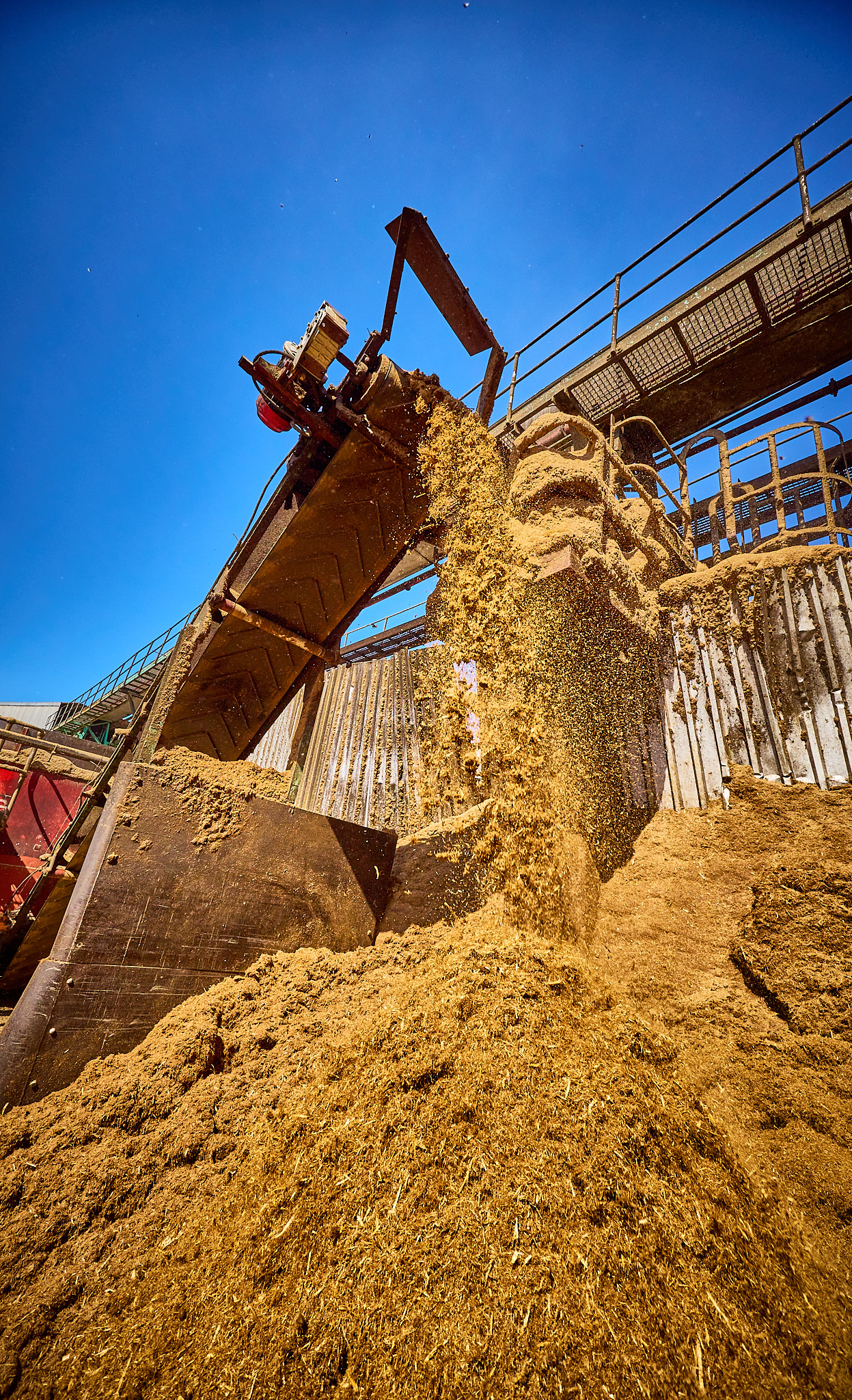
Molasses Meal
In alignment with our focus on renewable innovation, we combine these byproducts to deliver added value for stakeholders and customers. By integrating bagasse and raw molasses, we produce a cost-effective, palatable, fibre- and energy-rich animal feed suitable for dairies and feedlots. This feed is available in bulk or bale form and distributed through our established supply chain.
Molasses provides essential nutrients, energy, and enhances palatability, while bagasse supplies valuable fibre content. The feed has been shown to promote healthy digestion in livestock, particularly when used alongside other feeds, such as maize silage.
Available formats: Molasses meal (bagasse/molasses blend) is supplied in bulk or in bales.
Bagasse
Bagasse is the fibrous residue that remains after sugar cane has been crushed to extract its juice. At our mill, harvested cane is fed through an extraction process and is dewatered by heavy-duty mill rolls that squeeze out the sugar-laden juice. What’s left behind — the dry, fibrous cane material — is bagasse. A portion of this is used internally as boiler fuel for steam and power generation, and the surplus is recovered and made available for sale as a value-added product.
We can produce up to 80,000 tons per year.
Packaging and Sizes
We offer bagasse in the following formats:
Bulk bagasse — supplied loose for high-volume customers.
Bagasse Benefits
- High-fibre roughage source — supports rumen health, promotes proper cud-chewing, and maintains digestive function in livestock.
- Energy boost from molasses — the bagasse/molasses blend (molasses meal) delivers a palatable, energy-rich feed that livestock readily consume, improving intake of an otherwise low-palatability roughage.
- Renewable and sustainable — a by-product of sugar production, supporting circular-economy procurement.
- Long shelf life — sealed bales preserve the product for extended storage without degradation.
- Easy handling and storage — baled formats make transport, storage, and on-farm handling straightforward, with bulk supply available for larger feedlots and mixing operations.
- Consistent quality — produced under controlled mill conditions, ensuring reliable nutritional specifications batch after batch.
- Flexible supply — choice of bulk or baled formats to suit different logistics and handling capabilities.
- Flexible loading times — we can load trucks at any time of the day.